|
Israel
Building 660 Units In West Bank Settlements
OCCUPIED
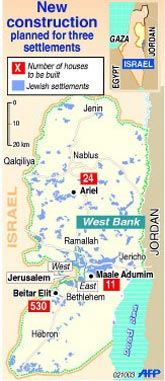
JERUSALEM, October 2 (IslamOnline.net & News Agencies) - Although
its decision to build a new stage of the controversial separation wall
draw world fire, Israel announced Thursday, October 2, a tender to
expand settlements in the occupied Palestinian West Bank.
Some
530 of the new 550 housing blocs are to be built in the ultra-Orthodox
settlement of Beitar Elit near Bethlehem, 50 in Ma'aleh Adumim - and 24
more in Ariel, a sprawling enclave of 18,000 near the West Bank city of
Nablus, reported Haaretz.
Israeli
Housing Ministry spokesman Kobbi Bleich told Agence France-Presse (AFP)
the tender "was part of a government decision to develop the
communities in accordance to their needs and natural growth."
The
Israeli Army Radio reported that the plan also calls for up to 100 new
units in Efrat, between occupied Jerusalem and Bethlehem, said Haarezt.
According
to the Israeli daily, the Israeli government issued tenders this week
for at least 600 new housing units in the West Bank, said the Israeli
daily.
Israeli
Housing Minister Effi Eitam is a member of the far-right National
Religious Party with close ties to the settlers.
Condemned
 |
|
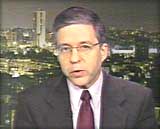
"Settlement
activity is ideologically motivated in order to prevent a two
state settlement," Beilin said
|
Yossi
Beilin, a former Israeli minister who was one of the chief architects of
the Oslo peace accords, said the latest settlement announcement appeared
designed to scupper such a solution.
"Settlement
activity is ideologically motivated in order to prevent a two state
settlement," he told AFP.
"This
activity is working against it," Beilin maintained.
The
Israeli movement Peace Now condemned the decision and stressed that
since the start of 2003, Israel have launched tenders for 1,300 new
homes in the settlements, with a capacity for 5,000 new settlers.
The
group said in a statement that the housing ministry was acting as
"a master planner for the settlers, while the other Israeli
citizens were bearing the brunt of the economic, security and political
cost" of the continued settlement building.
The
tenders drew criticism from Palestinians, with Palestinian cabinet
member Yasser Abed Rabbo asserting that this "is evidence that the
road map has been fully assassinated by an Israeli policy of settlement
expansion, to which the United States is a witness."
 |
|
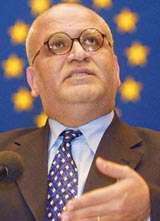
"They
have chosen a policy of settlements and dictation rather than
peace and negotiations. It kills the idea of a two-state
settlement," Erekat said
|
Chief
Palestinian negotiator Saeb Erakat said "this is not a security
wall, these housing units are not intended for security, this is a land
grab."
"They
have chosen a policy of settlements and dictation rather than peace and
negotiations. It kills the idea of a two-state settlement," he
added.
About
220,000 Israelis live in the West Bank, in settlements considered
illegal under international law, said the BBC News Online.
Despite
international laws banning settlement in occupied areas, Israeli
settlement building has expanded continually since Israel's occupation
of the West Bank and Gaza in 1967, increasing rapidly in the late 1970s
when the current Prime Minister, Ariel Sharon, was housing minister,
said Haaretz.
Palestinians
have long feared that the growth in Israeli settlements which mark the
maps of the West Bank and Gaza Strip were undermining the viability of
any future independent state.
The
Israeli government is obliged under the terms of the roadmap - a
blueprint endorsed by both the Palestinians and Israelis which would
lead to a two-state settlement by 2005 - to halt all settlement
activity.
The
ministry’s announcement came a day after another controversial
decision by the Israeli government okaying the construction of the next
phase of a controversial security barrier.
Anti-Wall
The
Israeli decision for continuing with the second phase of the separation
wall was met with a chorus of world criticism.
Britain
warned Israel’s decision would be an "obstacle" to achieving
a Middle East peace settlement.
"Breaking
up the West Bank with the fence, and settlements like Ariel are an
obstacle to the two state solution and harm Israel's long term
security," a spokesman for the British Foreign Office said.
For
its part, France stressed it would "without delay" hold talks
with EU partners, Russia, the United States and the United Nations on
the consequences of Israel’s decision to build the new stage of the
separation wall.
"France
will coordinate without delay with its European partners and the members
of the Quartet to examine the consequences that can be surmised from the
decisions announced yesterday about the dividing wall," foreign
ministry spokesman Herve Ladsous told reporters.
"France
recognizes the undeniable right of Israel to security, but disapproves
of the decisions that undermine the 1967 borders and prejudge the future
borders of Palestine."
He
said Paris was calling on both sides to return to the failed peace
process, the so-called road map drawn up by the Quartet.
U.N.
report underlined
Tuesday, September 30, that the separation wall marked illegal
annexation of Palestinian territory and must be condemned by the world
community.
U.S.
Refrain
But
the United States chose Wednesday not to criticize in public Israel's
decision to build the next stage of a vast barrier in the West Bank,
saying it would continue to discuss the issue with senior Israeli
officials, Haaretz said.
Washington
opposes the wall project and has warned that it may deduct costs of any
construction of the fence that deviates from the 1967 Green Line from
the already-approved loan guarantees totaling some $9 billion.
State
Department spokesman Richard Boucher said the U.S. position is
"unchanged", but he did not explicitly criticize the decision
to proceed with the fence.
"It
remains our long-standing policy to oppose activities by either party in
the West Bank and Gaza that prejudge final-status negotiations," he
said.
Palestinian
President Yasser Arafat on Thursday described the separation wall as
"the wall of racism which destroys peace."
"This
Israeli decision extends this wall of racism which has already usurped
60 percent of our land," he told reporters.
Addressing
"international public opinion, the quartet, the Arab league, the
United Nations and the entire world," Arafat asked: "How long
will this silence in the face of Israeli crimes last."
|