|
IAEA Condemns Iran, Rules Out Sanctions
 |
|
"The
resolution marked "a good day for peace, multilateralism and
non-proliferation," ELBaradei
|
VIENNA,
November 26 (IslamOnline.net & News Agencies) - The U.N. nuclear
watchdog unanimously condemned Iran Wednesday, November 26, for its
nuclear activities but
did not recommend that Tehran be sent to the U.N. Security Council to
face possible sanctions.
The
35-nation board of directors of the International Atomic Energy Agency
(IAEA) agreed on the compromise resolution, after a tussle over the
wording between the United States and European countries, in Vienna
earlier Wednesday, reported Agence France-Presse.
The
resolution balances the U.S. call to condemn Iran for 18 years of
hidden nuclear activities that included making plutonium and Britain,
France and Germany's demand that Iran be rewarded for cooperating
since October 2003 with the IAEA.
The
U.S. dropped demands to take Iran immediately before the Security
Council for "non-compliance" with the nuclear
Non-Proliferation Treaty (NPT).
But
it got a guarantee that the Council be alerted if Iran's violations
continue. It considered a "trigger mechanism" in the
resolution which says that if "any further Iranian failures come
to light, the Board of Governors would meet immediately to consider
... all options at its disposal".
"The
draft resolution (on Iran) has just been adopted by consensus,"
said spokesman Mark Gwozdecky told reporters shortly after meeting.
U.S.
ambassador to the IAEA Kenneth Brill told the board that Washington,
which accuses Tehran of secretly developing nuclear weapons, felt that
any future violations by Iran of nuclear safeguards would necessitate
"an immediate report to the U.N. Security Council".
'Good
Day'
 |
|
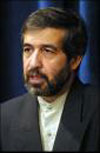
"The
resolution shows that Iran has carried out its civilian nuclear
activities honestly and transparently," Asefi
|
IAEA
chief Mohamed El-Baradei said the resolution marked "a good day
for peace, multilateralism and non-proliferation".
But
he warned the resolution was meant as "a very serious and ominous
message" for Iran to comply with international regulations in the
future.
He
further said: "We naturally still have much verification work to
do before we can provide the assurances expected by the international
community, specifically that all nuclear activities in Iran are fully
declared and are exclusively for peaceful purposes."
He
added that he would file a report on Iranian compliance for the next
IAEA board meeting in March 2003.
Iran
promised
on October 21 in an agreement with the European big three to sign the
additional protocol to the nuclear Non-Proliferation Treaty (NPT) and
delivered a letter formalizing this promise on November 10 to
ElBaradei.
In
return, Iran was promised the issue would not go to the Security
Council when the IAEA board met in November.
The
protocol was created in 1997 after the IAEA discovered that previous
inspections had not been broad enough to uncover hidden nuclear
activities in Iraq.
It
gives the IAEA inspectors the right to make unannounced visits to
suspect sites, even if the host country has not declared them as open
to inspection.
Iranian
Welcome
Meanwhile,
Iran hailed Wednesday the resolution, describing it as an achievement
fort the Islamic republic.
Foreign
ministry spokesman Hamid Reza Asefi, in a statement sent to AFP, said
the resolution proved the country's transparency.
"This
resolution is an achievement for the Islamic republic of Iran and
shows that Iran has carried out its civilian nuclear activities
honestly and transparently, and despite the uproar of certain
oppressive circles has not sought to manufacture a nuclear
weapon," Asefi said.
Asefi's
statement was referring to the United States and its ally Israel,
which charge that Iran's nuclear program poses a threat to the Jewish
state's existence.
At
the time Israel is warning against Iran’s alleged nuclear arsenal,
Israel's nuclear arsenal has grown from an estimated 13 nuclear bombs
in 1967 to 400 nuclear and thermonuclear weapons to date, according to
a report published by The Los Angles Times on October 11.
"What
has taken place these past few days is the failure of unilateral
policies ... and a victory for cooperation, politics and
dialogue," Asefi said.
"We
expect the IAEA to conduct its future cooperation in a sincere manner
... so as to allow Iran to continue with sincerity its policy of
cooperation with the agency under the framework of the Tehran
Declaration," said Asefi, referring the to Iran's October 21
promise.
|