|
Shiites
Use Iraq Status Quo to the Fullest: Expert
 |
|
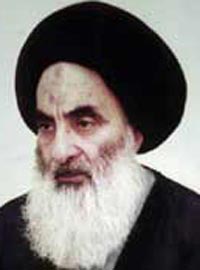
Sistani
has said any election delay is non-negotiable
|
By
Abdul Raheem Ali, IOL Staff
CAIRO,
November 30 (IslamOnline.net) – Following years of marginalization
under the reign of ousted president Saddam Hussein, Iraq’s Shiites
believe it is high time they dominated the country’s political
landscape, opposing vigorously putting off general election slated for
January 30, a military and political Iraqi expert said on Tuesday,
November 30.
“Shiite
authorities want to make the fullest out of the political status quo
and lay to rest string criticism and accusations from their own
community of being inert,” Mohammad Al-Askari told IslamOnline.net
in an interview here.
After
having been left on the shelf for decades, they resurfaced now as the
most powerful and influential in Iraq’s religious and political
mosaic, he said.
Askari
said Shiite authorities and politicians make use now of the Sunnis’
rejection, chiefly from the Association of Muslim Scholars (AMS), to
take part in the January vote under the US occupation and the fierce
battles between Sunni resistance groups and the occupation troops.
“Add
to that, the Americans do know that they (the Shiites) are a majority
in Iraq.”
According
to official statistics released following the US occupation of Iraq,
Shiites make up 60-65% of the Iraqi people.
However,
London-based Al-Quds press news agency said in a January report that
the Iraqi Sunnis outnumbered the Shiites in the oil-rich country.
The
AMS has called
for a boycott to the January elections. So far, close to 70
groups have threatened to boycott the vote, charging that any poll
should only be held after the withdrawal of foreign troops, and to
protest onslaughts on Sunni cities.
Sending
a strong message, a spokesman for Iraq's top Shiite scholars Grand
Ayatollah Ali Al-Sistani said they would
not accept any attempt to delay the elections.
Swimming
against the Shiite current, young Shiite
leader Muqtada Al-Sadr has
called for boycotting the elections, protesting continued US
occupation of his country.
Expediting
Pullout
Askari
further said that Shiite authorities believe that the elections would
help “expediting” the pullout of the US-led occupation troops.
“They
want to elect a government as soon as possible to that end,” he
said.
The
Shiites are confident that “if the elections were put off, it would
open the possibility of being postponed sine die or even cancelled
under different circumstances, which would means the Shiites would
lose their current political privileges,” the expert added.
But
Askari said that dismissed the current political status quo in Iraq
would lead to politically marginalize the Iraqi Sunnis.
“The
occupation authority can’t exclude the Sunnis entirely from the
scene and doesn’t mind if they even managed to capture few seats in
the (275-member) parliament to give credibility to the political
process.”
Undeclared
Resolution
On
the much-criticized Sharm El-Sheikh international conference on Iraq
held on November 22-23, Askari, who participated in the event as an
independent observer, revealed that it had adopted an undeclared
resolution calling for not marginalizing any community in the upcoming
election.
“The
conference further called on the interim government of Iyad Allawi to
hold dialogue with the Sunni resistance and reach a reconciliation
with Sunni opposition leaders abroad to set stage for the January
vote,” he said.
Iraqi
Prime Minister Iyad Allawi is due to arrive in Jordan Tuesday for
talks with leading Iraqi exiles in an effort to involve all Iraqis in
the elections.
“The
aim is to find a common ground and explain to them the situation on
the ground,” said Thaer Al-Naqib, the Iraqi government spokesman.
Iraqi
foreign minister Hoshyar Zebari said Thursday, November 25, that the
government was planning to hold
talks with Iraqi resistance soon in the Jordanian capital
Amman upon calls from various parties who attended the Egypt
conference.
The
conference
closed on November 23 after adopting a declaration in support of the
country’s January election, but fell short of setting a timetable
for the withdrawal of the US-led occupation troops amid calls of
“legitimizing” the occupation.
|