|
People Have Final Say on Unarmed Intifada: Experts
 |
|
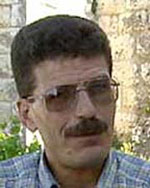
“It
is very likely that the voters will reconsider their position if
the platform of their candidate fails to live up to their
expectations,” said Faris.
|
By
Samer Khuwayera, IOL Correspondent
NABLUS, January 5 (IslamOnline.net) – The Palestinian people should have
the final say on whether to de-militarize the second Palestinian
Intifada, as urged by presidential frontrunner Mahmoud Abbas,
according to Palestinian experts and officials Wednesday, January 5.
They
agreed that resorting to the armed Intifada or sitting down to the
negotiating table, or juggling between both, were governed by the
circumstances of every juncture of the Palestinian struggle for an
independent state.
Minister
of State Kadoura Faris said no body could tailor a particular pattern
for a people living under occupation.
“The
Palestinian Authority and all resistance and political factions should
let the lay people to have their say on their next leader and his
agenda to end the occupation,” Faris told IslamOnline.net.
But
he reinforced that there would be no “absolute mandate” from the
people for any particular leader.
“It
is very likely that the voters will reconsider their position if the
platform of their candidate fails to live up to their expectations.
They might go to the streets and demand the resignation of the next
president and the holding of new election.”
Abbas
angered Palestinian factions last month when he renewed calls for
“demilitarizing” the Intifada and criticized the rocket attacks on
the Israeli settlements as counterproductive.
The
Palestinian presidential election — the first to be held since 1996
— is to take place on January 9 in the occupied territories of the
West Bank
and Gaza Strip.
With
seven candidates vying, Palestinian voters will elect a new chairman
of the Palestinian Authority to replace their emblematic leader Yasser
Arafat, who dramatically passed away on November 11, 2004.
The
popular resistance movement Hamas said on December 22 it would neither
support any of the Palestinian presidential hopefuls nor name a
candidate, charging the vote has been “tailored”
for Abbas.
Unified
 |
|
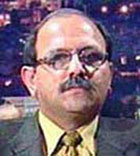
“The
Intifada remains as a legitimate Palestinian right and I myself
oppose condemning it,” said Al-Masri.
|
Rafik
An-Natcha, member of the Legislative Council and former Fatah member,
said the Palestinians are not trapped in a vicious circle, predicting
they would rather act in unison.
“They
definitely rally behind the resistance, though they differ with one
another on the timing and the form,” he told IOL.
He
opted for giving diplomacy a chance before adopting other
alternatives.
Prominent
analyst Hani Al-Masri agreed that Palestinians have too much in common
and are unified by the occupation.
“The
inter-Palestinian dialogue has come along way recently,” Al-Masri
said.
But
he added the Palestinian people became “exhausted” after four
years of Intifada and need to “relax,” noting that adhering to
resistance as the one and only solution was not a “positive
thing.”
“In
fact this serves Fatah’s agenda, but needless to say that the
Palestinians are forced to defend themselves and resist the aggressive
Israeli policies.
“But
Intifada remains as a legitimate Palestinian right and I myself oppose
condemning it.”
Mohammad
Ghazal, a leading Hamas member, said that the Palestinian resistance
movement should have a card up to its sleeve when dealing with the
Israeli occupation.
“It
is not a matter of choosing between resistance or negotiations,” he
said. “Resistance is not all about arms but has many facets,
including politics.”
Palestinian
pundits have said that the second Palestinian Intifada has left its
indelible marks compared to the 1987 Intifada (first one) against the
Israeli occupation.
Following
the killing of four Palestinian workers at the hands of Israeli
settlers, the Palestinians launched their first seven-year Intifada
(Stone Intifada) against the occupation forces.
And
in September 2000, Al-Aqsa Intifada erupted in the wake of the
provocative visit of the then Israeli opposition leader Ariel Sharon
to Al-Aqsa mosque, Islam’s third holiest site.
|