|
Malaysia Says Has Responsibility Toward Thai Muslims
 |
|
"Malaysia
is the chairman of OIC and one of the roles of OIC is to ensure
the safety of Muslim minorities living in non-Muslim countries are
guaranteed," Syed said.
|
KUALA
LUMPUR, September 6, 2005 (IslamOnline.net & News Agencies) – In
a direct reference to the plight of Thai Muslims, Malaysia's foreign
minister has said that his country, as a chairman of the Organization
of Islamic Conference (OIC), has a responsibility to express its views
if Muslims' safety were threatened.
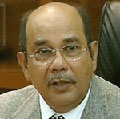
Syed
Hamid Albar said while Malaysia was concerned about the on-going
crisis in southern Thailand, it was also careful in handling the
delicate issue, Malaysia’s official Bernama News Agency reported
Tuesday, September 6.
"Malaysia
is the chairman of OIC and one of the roles of OIC is to ensure the
safety of Muslim minorities living in non-Muslim countries are
guaranteed and their security is not threatened," he told
reporters after opening a seminar Monday.
"Thailand
is not very far from Malaysia and what happens in south Thailand has a
direct impact on us, so we just cannot keep quiet.
The
half-day seminar, entitled "Reform of the United Nations and the
Organization of Islamic Conference: Impact on the Muslim World in the
21st Century", was organized by the International Islamic
University's Department of Political Science.
The
government “will do what it takes” to ensure what is happening in
a neighboring country will not adversely affect Malaysia, The Star
quoted him as saying.
While
Malaysia has no intention of meddling in its neighbors’ internal
affairs, the government could not remain silent when scores of people
from across the border enter the country, Syed Hamid said.
“We
need to ask why,” he said.
“In
all bilateral matters, interaction and understanding is important. In
the case of Thai nationals crossing our border, we need to find out
why they are seeking shelter here. We can’t just deport them.
“The
Immigration Department has been given the task to find out the
situation from the fleeing Thais and we will have to look at the
findings before we make any decision,” he said.
"As
a friend and Asean member, we have to give our views without
interfering with their internal affairs. In the current world, nobody
can keep quiet if something happens but this should not be construed
as teaching them (Thais)," he added.
Some
131 Thai Muslims, including 43 children, have fled to Malaysia 's
northeastern state of Kelantan last week, saying they left their
villages in Narathiwat province after the army arrived.
The
incident has set the stage for a possible row between the Malaysia and
Thailand, although diplomatic contact has been intense.
The
two countries will hold a special meeting Saturday to discuss the
issue, Bernama reported.
Chief
of Armed Forces Laksamana Tan Sri Mohd Anwar Mohd Nor said Monday he
would head the Malaysian team to the talks with the Supreme Commander
of the Royal Thai Armed Forces General Chaisit Shinawatra and his
delegation.
Thailand
is a predominantly Buddhist nation but Muslims make up about five
percent of the population and mostly live in the five southern
provinces bordering Malaysia.
The
Thai government has declared emergency rule across the
predominantly-Muslim south, once an independent Muslim sultanate,
under a decree rubber-stamped by a hastily convened cabinet meeting on
Friday, July 15.
The
controversial measure grants Thai Prime Minister Thaksin Shinawatra
the power impose curfews, censor news, ban public meetings, tap phones
and hold suspects without charge for up to 30 days.
The
new sweeping powers drew fire
from the press and activists as dictatorial and a recipe for more
violence and has prompted strong reactions from civic groups which
argue that it violates many basic rights.
The
International Crisis Group (ICG) stressed Thursday, May 19, that the
Thai government's failure to address injustices and open a genuine
dialogue with Muslim leaders in the south is the real reason behind
unrest in the country.
Thailand
's national rights watchdog also accused the army of "violent
breaches of human rights" against Muslims in the south.
UN
Probe
 |
|
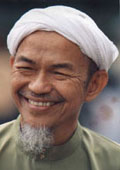
Nik
Mat warned that more unrest would follow unless Thailand addressed
the grievances of its southern Muslims.
|
Meanwhile,
the office of the UN High Commissioner for Refugees said its officers
will interview the 131 Thai Muslims currently being sheltered in
northern Malaysia, The Nation reported Tuesday.
Volker
Turk, the Malaysia-based representative of the UN High Commissioner
for Refugees, said in a statement that the agency’s officers would
be sent to Kelantan this week to meet with the Thais in cooperation
with local authorities.
“It
is standard practice for the UNHCR to have access to, and to
interview, any group of people who claim refuge in a particular
country,” he said.
Thai
Deputy Prime Minister, on the other hand, urged the UN's refugee
agency not to take up the case of the 131 Thai Muslims.
Surakiart
Sathirathai said that foreign ministers of both countries are
discussing the case.
"These
people are not refugees, and it's unlikely the UNHCR needs to get
involved," he said.
"This
is a case of illegal entry. Many people go back and forth across the
border, this just happens to be a large number of them," he said.
Thaksin
had denied accusations that the 131 villagers had fled because they
were afraid of the Thai authorities, The Nation reported
Sunday.
Reports
from the border area said the Thais fled after a tense standoff
between residents of Narathiwat’s Ban Rahan and security forces,
following the shooting death of a local imam.
The
villagers accused the police of killing the imam and protested by
blocking the entrance of the village to security forces wishing to
investigate the incident, The Nation reported.
After
being threatened with charges of obstructing justice, many decided to
flee their homes for Malaysia. Others from nearby districts joined
them in the exodus.
A
UN human rights committee and local and international rights groups
have condemned the decree for its sweeping powers, while lawyers argue
its powers are vaguely defined and allow for possible power abuses.
Nik
Aziz Nik Mat, spiritual leader of the Pan-Malaysia Islamic Party and
Kelantan’s chief minister, warned last week that more unrest would
follow unless Thailand addressed the grievances of its southern
Muslims, according to The Nation.
Muslims
have long complained of discrimination and of being made to feel they
are not equal to other Thai citizens.
|