|
Kanaan Demise Blow to Syrian Regime: Report
 |
|
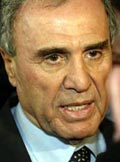
Kanaan was the de facto ruler of Lebanon for 20 years.
|
By
Salwa al-Astawani, Ahmed Fathy (IOL Correspondent, Staff)
DAMASCUS,
October 14, 2005 (IslamOnline.net) – The death of Syria's Interior
Minister, whether suicide or murder, is likely to see a domino effect
on the pillars of the regime, leading to its eventual downfall,
London-based leader of the banned Muslim Brotherhood-Syria has said,
as political analysts expressed doubts on the official
"suicide" theory.
"We
have no information to deny or support either possibilities (suicide
or murder) on the death of the former minister, but what matters now
is the outcome and that is the regime is declining,” Sadruddin Ali
Al-Bayanouni told IOL Thursday October 13, over the phone from London.
"The
Syrian regime is built on security pillars. Kanaan was one of the
strongest among these and his death is sure to have a domino effect on
the rest and the regime as a whole.
“His
demise could be either suicide, assuming he felt death was a better
choice for him, or assassination in a bid by some quarters to bury
with him secrets of some criminals,” he added.
“Kanaan
was not an ordinary man, but rather a symbol of the Syrian influence
in Lebanon. He spent 20 years as the de facto ruler in Beirut,
interfering in the tiny country’s internal affairs,” he
pinpointed.
Syrian
Interior Minister Ghazi Kanaan committed suicide in his Damascus
office Wednesday, October 12, shortly after denying reports in
Lebanese media about his involvement in the assassination of former
Lebanese Premiere Rafiq Hariri.
Doubts
 |
|
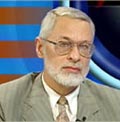
Whether it was suicide or murder, Kanaan death is a destructive blow to the Syrian regime, according to Bayanouni.
|
But
a Syrian member of parliament expressed deep doubts about the official
version of the tragic incident.
Mohamed
Hebish told IOL Thursday Kanaan "enjoyed his usual deep
self-confidence and normal strength during a meeting with him in the
cabinet headquarters two days before the demise".
The
Islamist independent parliamentarian added it was "so difficult
to believe the suicide theory".
A
Syrian political analyst agreed with Hebish.
“There
are two possibilities; he could have been killed because he was
cooperating from behind the screens with the international committee
investigating the murder of Hariri, or it was an attempt to intercept
the investigation by killing one of the witnesses,” Yassin Al-Hajj
Salih told IOL.
Kanaan,
a former military intelligence chief for Lebanon, killed himself after
a UN team investigating the assassination in Beirut of former Lebanese
premier Rafiq Hariri interviewed him and a number of Syrian figures in
connection with the case last month.
It
also comes just two weeks before the UN commission of inquiry into the
Hariri assassination is due to release a report on its findings.
Foreign
Pressure
 |
|
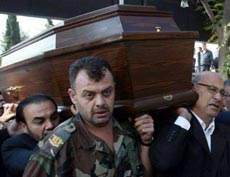
The suicide of Kanaan could trigger further foreign pressures on Damascus, Syrians fear.
|
On
the other hand, Syrians are concerned the suicide of Kanaan could
trigger further foreign pressures on Damascus, , according to IOL
correspondent.
The
Arab state is already under horrifying pressures that caused a state
of chaos since Hariri was assassinated February 14, 2005.
Four
pro-Syria top security officials in Lebanon were questioned by the
international prosecutors and then detained.
The
Kanaan incident is another “earthquake that shook the Syrian
government, a tremor that is not less in magnitude than that of Hariri
murder,” said Salih.
But
Syrian Information Minister Mahdi Dakhlallah told reporters after the
funeral of the former minister the suicide of Kanaan had absolutely
nothing to do with the investigation into the assassination of Hariri.
Kanaan
was never questioned by Mehlis’ team, he said, adding the deceased
was a witness, who could provide information to the international team
on the situation in Lebanon.
Kanaan
has never complained from any injustice by the ruling regime, said
Dakhlallah, adding that he was only angry with the media for the wrong
messages they were giving of him.
Damascus
chief public attorney Mohamed Marwan Al-Louji told reporters Thursday
investigation into the incident proved the suicide theory and it took
place when Kanaan shot himself dead with his personal revolver.
Syrian
Foreign Minister Farouq Al-Shara, on his part, rejected allegations by
some Arab media that Kanaan feared the ruling regime would sacrifice
him as a scapegoat in the probe into the murder of the former Lebanese
premier.
|