|
Kenyans Reject New Constitution: Official Results
 |
|
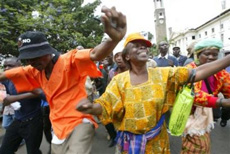
Opponents celebrate killing the charter.
|
NAIROBI,
November 22, 2005 (IslamOnline.net & News Agencies) - Kenyan
voters soundly rejected a proposed new constitution in a landmark
referendum, dealing a major blow to President Mwai Kibaki who
supported the draft, according to official results released Tuesday,
November 22.
With
ballots from only 500,000 potential voters in 14 of 210 constituencies
uncounted, the "no" camp held an insurmountable lead of more
than one million votes in Monday's plebiscite, according to the
national election board, reported Agence France-Presse (AFP).
"According
to results we have tallied, the 'no' team is apparently
unbeatable," an election official told AFP on condition of
anonymity.
The
official said a formal announcement of the rejection of the first
major changes to Kenya's charter since independence from Britain in
1963 would be made later Tuesday after the outstanding results were
received.
The
official declined to give a breakdown of the count but the panel had
earlier released partial results giving 59 percent of the vote to the
"no" side, against 41 percent for "yes", with a
large number of spoiled ballots.
It
said opponents of the draft had won 3.3 million votes against 2.3
million for the "yes" camp, while Kenya's private Nation
Television reported that the "no" camp held an unassailable
lead.
Officials
said Kibaki planned to make a televised national address at noon (0900
GMT). Constitution opponents also planned a news conference.
Opposition
Foes
of the draft document, led by opposition chief Uhuru Kenyatta and
Kibaki's influential Roads Minister Raila Odinga, had urged its
rejection as it retained sweeping presidential powers.
They
accuse Kibaki, who was elected in 2002 on a reform platform, of
reneging on promises to address popular demands to devolve significant
executive powers to a new prime ministerial position.
The
draft creates such a post but endows it with mainly ceremonial duties,
including presiding over parliament.
The
majority of Kenyan Muslims also gave the thumbs-down to the new
constitution for fears that the document violates the religious rights
of the Muslim minority.
Sheikh
Shariff Naban, a member of the Council of Imams and Preachers of
Kenya, has told IOL calls by Kenyan Muslims to entrench the Shari`ah
courts, known as Kadhi courts, have been ignored in the new charter.
Muslims,
who make up ten percent of Kenya's 30 million population, believe the
introduction of Kadhi courts in the new constitution would provide
them with a wider space to exercise freedom of worship.
Some
Christian church leaders also opposed the document because "it
gave legal status to Muslim courts" and carried provisions that
they believe could legalize on-demand abortions and gay marriage.
Analysts
said the results showed voters had cast ballots along tribal lines
with Kibaki's Kikuyu community largely supporting the draft, while
Odinga's Luo tribe overwhelmingly opposed. The two tribes are Kenya's
largest.
"The
results show that the voting trend was certainly tribal," Kamatho
Kiganjo, a lawyer and political analyst, told AFP.
Consequences
 |
|
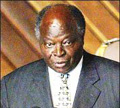
Kibaki faces a hugely embarrassing situation.
|
With
the charter dead, pending official declaration, speculation turned to
the political ramifications.
Rejection
of the draft would be an embarrassing setback for Kibaki who had
invested heavy political capital in leading the "yes"
campaign ahead of presidential elections due in 2007.
"This
is a damaging blow to Kibaki, at least I can see new political
alignments after the full results are out," Evans Manduku, a
political science lecturer at the University of Nairobi, told AFP.
Top
of the agenda was how Kibaki, 74, would deal with seven rebel
ministers who campaigned for a "No" vote in a move that
split the ruling National Rainbow Coalition, according to Reuters.
During
the campaign, he had threatened to sack them once the charter was
adopted.
But
one leading "No" proponent, KANU shadow attorney-general
Mutula Kilonzo, told Reuters instead that Kibaki's attorney-general
and justice minister should resign over their roles in drawing up a
document overwhelmingly rejected by the Kenyan people.
Analysts
were also trying to work out how much concrete damage the vote had
done to Kibaki's re-election chances.
"There
is a lot of work to do in terms of healing," analyst Patrick
Kiage told Reuters.
But
Kibaki supporters try to put on a brave face, saying there was no need
to panic.
"We
said previously we will abide by the results, however
disappointing," Water Minister Martha Karua told Reuters.
"There is no crisis, there is no vacuum, and there is a
constitution in place that will continue governing this country."
|