|
OIC Agrees on Terror Combat, Development Fund
 |
|
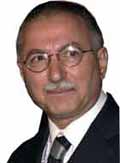
"Our plan is about moderation and modernization," Ihsanoglu said.
|
MAKKAH,
December 8, 2005 (IslamOnline.net & News Agencies) - Muslim
leaders wrapped up an extraordinary summit in the holy city of Makkah
on Thursday, December 8, by agreeing on measures to combat terrorism
and setting up a fund for development and emergency relief.
"Our
plan is about moderation and modernization," OIC Secretary
General Ekmeleddin Ihsanoglu told Reuters.
"Moderation
to fight the causes of extremism and modernization to pull the Muslim
world out of under-development," he said.
The
leaders of the 57-member Organization of the Islamic Conference (OIC)
pledged to "update national laws to criminalize all acts of
terrorism as well as its financing and incitement".
In
the Makkah Declaration read out in the final session of the two-day
summit, they also called upon their peoples to "combat forcefully
the preachers of sedition and deviation, who aim to distort the
peaceful principles of Islam".
They
also called for "greater and coordinated international
efforts" to combat terrorism and backed a Saudi proposal to set
up an international counter-terrorism body.
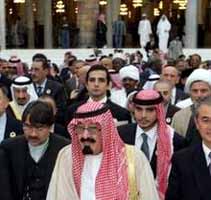
Host
Saudi King Abdullah bin Abdel Aziz opened the summit Wednesday,
December 7, with a call for moderation and tolerance and a rejection
of extremist violence.
Unity
 |
|
The
Muslim leaders agreed to set up a fund for development and emergency
relief for those in need among the world's one billion Muslims.
(Reuters)
|
In
an attempt to address sectarian divisions among Muslims, an article
which bans accusations of apostasy being leveled at certain groups was
added to a 10-year plan of action to confront the challenges of the
21st century.
The
article, which aims at reducing tension between Sunni and Shiites,
stressed "the correct belief of Muslim groups ... as long as they
believe in God ... and all principles of Islam."
The
Muslim leaders stressed that fatwas (religious edict) should only be
issued by qualified scholars.
Saudi
Foreign Minister Prince Saud Al-Faisal has asserted that the OIC's
Islamic Jurisprudence Academy "should become the highest
reference in jurisprudence ... and put an end to the multitudes of
references and conflicting fatwas".
King
Abdullah has also called on the Jurisprudence Academy to "fulfill
its historic role of combating extremism".
The
summit allowed the leaders of Saudi Arabia and Iran to meet for the
first time since a public row over Riyadh's accusations that Tehran
was meddling in war-torn Iraq.
King
Abdullah held talks Wednesday with Iranian President Mahmoud
Ahmadinejad, who was making his first visit since taking office in
August.
The
dispute, which erupted after years of improving relations between Iran
and Saudi Arabia, led Iranian Foreign Minister Manouchehr Mottaki to
scrap a planned visit to Saudi Arabia in October.
Development
Fund
The
Muslim leaders also agreed to set up a fund for development and
emergency relief for those in need among the world's one billion
Muslims but did not specify how they would raise the money.
They
also approved a 10-year plan to increase trade between Muslims,
calling for intra-Muslim trade to be raised to 20 percent from 13
percent within 10 years.
"The
Islamic Development Bank will start studies on the fund,"
Ihsanoglu told Reuters.
"As
to other programs of the plan, they will require a longer time to be
implemented."
A
senior delegate at the talks said the leaders could not agree how to
finance the fund, given the huge disparity of wealth among OIC
members.
"We
don't expect poor Muslim countries to offer a percentage of their
budget of their GDP," he said.
"But
one symbolic dollar contribution, or one Muslim dinar, a year will be
enough
providing
that the commitment is there," he said.
OIC
member states range from oil-rich Gulf Arab states to poor African and
Asian nations like Niger and Bangladesh.
They
also include the conflict zones of Afghanistan and Iraq.
Malaysia's
Prime Minister Abdullah Ahmad Badawi said he hoped the fund would be
large enough "to support nations that don't have anything".
He
cast doubt on a summit declaration that one dollar for every Muslim
would be collected to preserve the Islamic identity of occupied East
Jerusalem.
"It's
a good idea ... but there are a lot of Muslims in the world who earn
less than a dollar a day," he told Reuters.
|