|
Tunisian Activist to Internationalize Hijab Ban
 |
|
"We
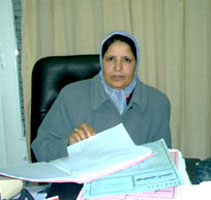
are preparing a special file to take our case to the UN," Al-Ekremi
told IOL.
|
By
Mohammad Al-Hamroni, IOL Correspondent
TUNIS,
January 19, 2006 (IslamOnline.net) – A prominent Tunisian lawyer and
human rights activist are threatening to "internationalize" a
government ban on wearing hijab, decrying it as a flagrant violation
of the people's simplest rights.
"We
are preparing a special file to take our case to the UN," Saida
Al-Ekremi told IslamOnline.net on Thursday, January 19.
In
1981, then Tunisian president Habib Bourguiba (1956-1987) ratified law
no. 108 banning Tunisian women from wearing hijab in state offices.
Worse
still, the government issued in the 1980s and 1990s more restrictive
enactments, said the Tunisian activist.
"I
had filed a lawsuit in 2002 before the country's administrative court
challenging the hijab ban," she added.
Tunisian
Religious Affairs Minister Aboubaker Akhzouri recently said that hijab
does not fit with the North African country's cultural heritage.
He
claimed that hijab was a "foreign phenomenon" in society,
drawing angry rebukes from the country's scholars.
Islam
sees hijab as an obligatory code of dress, not a religious symbol
displaying one’s affiliations.
Rights
Violation
 |
|
Gorshy
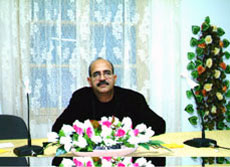
said the hijab bans violates Tunisians' right to free choice.
|
The
Tunisian lawyer said the hijab ban infringes on Tunisian women's
fundamental rights.
"The
basic rights of citizens, including the right to dress, are entrenched
in the Tunisian Constitution as well as international
conventions," maintains Al-Ekremi.
Human
rights activist Salah Al-Din Al-Gorshy agreed.
"There
are no solid grounds for the state's anti-hijab campaign," he
told IOL.
Gorshy
stressed that the anti-hijab stance by the ruling regime violates the
people's right to free choice.
"The
rights to life, death and choosing clothes are guaranteed for every
individual.
"Consequently,
women and girls have the full freedom to choose their dress
code," he averred.
Victimized
Ekremi
said that many Tunisian women have been discriminated just for wearing
hijab.
"Many
students have complained of being prevented from attending schools
because of hijab," she told IOL.
"Scores
of hijab-clad women have also been laid off simply for wearing hijab.
Many of them have secured court orders on unfair dismissal but to no
avail."
Sabah,
a 31-year-old housewife, is one of many Tunisians discriminated
against because of hijab.
"When
I was 16, I was banned from joining the secondary school," she
recalls.
"I
was told I would only be accepted after removing my hijab. The school
officials even told my parents to force me to take off hijab or leave
the school."
Fifteen
years on, Sabah can not find it in her heart to forgive those who
denied her education.
She
now prays that her two hijab-clad daughters would not have to suffer
the same discrimination.
Aisha,
39, regretted she had to take off her hijab to keep her job.
"I'm
now wearing a traditional headscarf that almost covers my head but
attracts no attention," she said.
Nesrine,
a law student, lamented the ongoing sufferings of hijab-clad women in
Tunisia, where Muslims make up 98% of the 10 million population.
"The
climate of fear in which Tunisian women live is absolutely unbearable.
"Some
students were barred from exams and others were attacked and mocked at
for wearing hijab," she cried.
"Why
can't we have the same right as half-naked girls roaming the streets
to wear what we want."
You
May Read Also:
|